

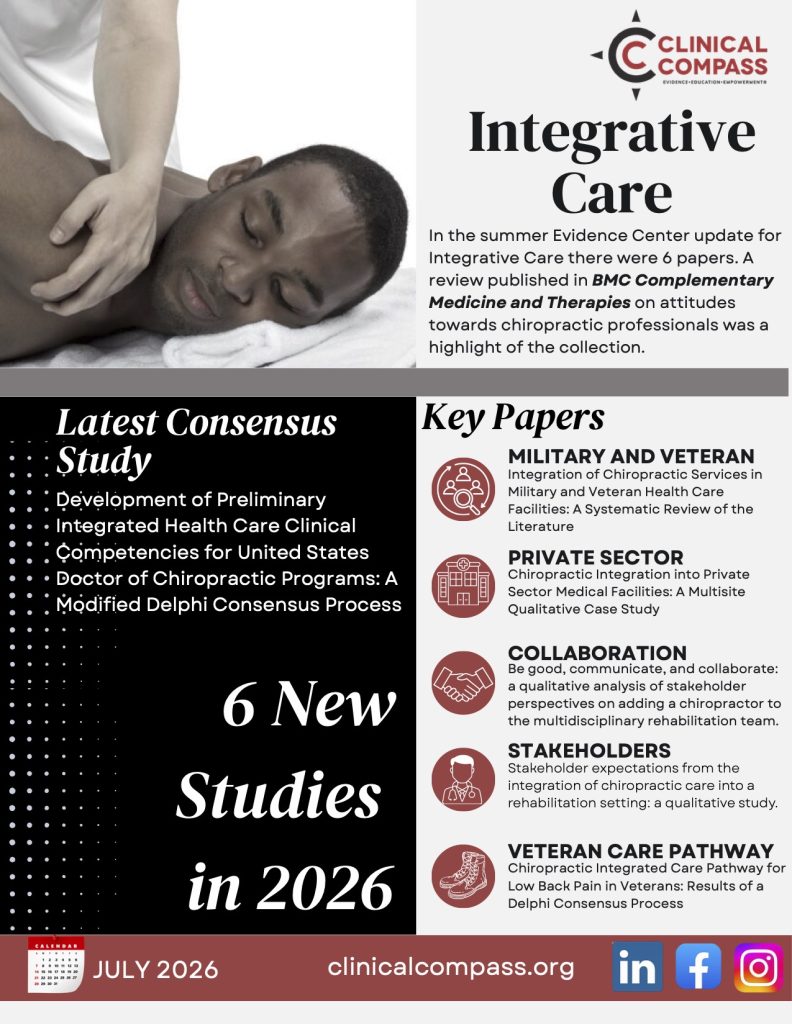
Integrative Care
In the summer Evidence Center update for Integrative Care there were 6 papers. A review published in BMC Complementary Medicine and Therapies on attitudes towards chiropractic professionals was a highlight of the collection.
Key Papers
Download PDF version
6 New Studies in 2026
Integrative Care—January-June 2026 Update
Effect of manual therapy (MT) by different healthcare providers on TMD
A 2026 systematic review assessed the effect of MT on TMD when performed by different healthcare providers in different countries. 18 RCTs were included in the analysis. Results: Overall, manual therapy was associated with reductions in pain and improvements in maximum mouth opening (MMO) across different professional background and techniques. Effects were predominantly observed in the short term. Physical therapists in rehabilitation settings showed the most consistent outcomes, particularly documented in Brazil. Chiropractic approaches were common in Australia, USA, and England, while Japan focused on intra-oral manipulations by dental and maxillofacial specialists. Italy, Spain, Greece and Turkey stand out for their interdisciplinary approach independently by chiropractors, physiotherapists, or osteopaths in TMD management. The authors concluded that manual therapy may be associated with short-term improvements. Variability in techniques, professional settings, and study designs precludes firm conclusions regarding long-term effectiveness or superiority of specific approaches. Physical therapy manipulation emerged as the most commonly used technique. Future research should explore long-term outcomes and multiprofessional collaboration. FREE FULL TEXT
Effect of combining self-care (SC) with practitioner-delivered complementary and integrative health (CIH) therapies for chronic MSK pain (cMSK)
A 2026 pragmatic nonrandomized cohort study (The APPROACH Study) assessed the effect of combining patient-led SC activities with practitioner-delivered CIH therapies on long-term outcomes for 3,306 veterans with cMSK at 18 medical centers in the Veterans Health Administration (VA). One group received only CIH (CIH included acupuncture, chiropractic care or massage therapy). The other group received both CIH and SC (SC included yoga, mindfulness/meditation, and/or Tai Chi/Qigong). Results: At 6 months, pain interference improved clinically and statistically significantly in both groups but with no difference between groups. More participants in the combined group reported their use of CIH therapies specifically led to perceived improvements across 4 global patient-centered measures: pain, fatigue, mental health and overall well-being. The authors concluded that patients with cMSK should be encouraged to add self-care therapies and health care systems should expand their availability. ABSTRACT
Effect of manual therapy modalities on depression
A 2026 systematic review assessed the effects of various type of MT on depression. 97 studies of various designs were included. Modalities studied were: acupressure, acupoint massage, bone setting, chiropractic manipulation, craniosacral therapy, energetic and light touch therapies, manual therapy, osteopathic manipulative treatment/therapy (OMT/OMTh), foot reflexology, massage therapy, and other soft tissue therapies. Results: 17 studies included patients with specific psychiatric diagnoses, 15 of which reported significant reduction in depression symptoms with MT. The number of studies in each modality showing beneficial effects on depression symptoms are: 6/6 acupressure; 5/6 chiropractic manipulation; 3/3 craniosacral therapy; 8/9 energetic therapies and light-touch therapies; 9/14 manual therapy; 5/10 OMT/OMTh; 2/3 foot reflexology; 32/45 massage therapy; and 2/5 other soft tissue therapies. The authors concluded that MT may be useful as a complementary adjunctive treatment for depression. FREE FULL TEXT
Attitudes and perceptions of health care professionals concerning chiropractors and chiropractic practice
A 2026 systematic review assessed other healthcare professionals’ perceptions and attitudes towards chiropractors to address the issue of suboptimal interprofessional communication and referral. 43 articles were identified (n=10,108), including qualitative and quantitative study designs. Results: Issues identified with influencing opinions of chiropractic practice included participants’ knowledge of chiropractic methods, scope of practice, interprofessional communication, research base and education. While many medical practitioners recognize the role of chiropractic care for specific MSK issues, skepticism remains on non-MSK claims and historical chiropractic dogmas, as well as perceived variations in evidence-based education and financial motivation. The authors concluded that the chiropractic profession should prioritize proactive educational interventions and improved information sharing to dispel misconceptions, foster interprofessional trust, and facilitate better integrated care for patients. FREE FULL TEXT
Effect of comprehensive and integrative medical services (CIMS) on degenerative lumbar spinal stenosis (DLSS)
A 2026 single-center, single-blinded RCT evaluated the efficacy and safety of adjunctive CIMS in 77 patients with DLSS and lower leg radiating pain (LLRP) requiring selective nerve root block (SNRB). All participants received SNRB plus pharmacotherapy (limaprost, pregabalin). The experimental group additionally received CIMS, a multimodal program consisting of acupuncture, cupping, and manual therapy delivered 8 times over 4 weeks. The primary outcome was pain intensity (VAS) at baseline and weeks 4, 8, and 12. Results: A greater pain reduction was observed with CIMS (p= 0.040). Adherence to CIMS modalities was high, and no unexpected adverse events occurred. These findings support the clinical utility of CIMS as an effective adjunctive treatment option for DLSS. FREE FULL TEXT
Effect of multidisciplinary treatment for tinnitus associated with TMD
A 2026 systematic review and meta-analysis evaluated various approaches to TMD-associated tinnitus. 5 RCTs were included (n=329). 2 evaluated multidisciplinary approach; 2 examined prognostic indicators; 1 analyzed low-level laser therapy. Results: A multidisciplinary non-invasive approach was found to be the most efficacious treatment for tinnitus associated with TMD. Baseline tinnitus severity, gender, quality of life, age, and tinnitus duration were considered predictive factors of clinical outcomes. FREE FULL TEXT
Integrative Care—2025 Update
Use of complementary and integrative health therapies (CIH) including chiropractic care among patients on long-term opioid therapy (LTOT) in the Department of Veterans Affairs (VA)
A 2025 retrospective cohort study described differences in the use of evidence-based CIH therapies among 281,903 individuals with chronic pain on LTOT), using data from Veterans Affairs electronic health records. Results showed that among the full cohort, the CIH therapy use rate was 9.5%. Use increased with each cohort entry year relative to 2017. In a multivariable model, variables associated with greater odds of CIH therapy use included being female, having a musculoskeletal pain condition, obesity, opioid use disorder, anxiety, depression, post-traumatic stress disorder, and receiving services in a flagship site. Lower odds of use were associated with being older, unmarried, prescribed higher opioid doses, smoking, and rural residence. The authors concluded that CIH therapy use has increased over time, consistent with national trends; however, differential patterns of exposure suggest the need to explore pathways to use. ABSTRACT
Effect on use of invasive pain treatment (IPT) among veterans with chronic pain of using VA Whole Health Services and integrative therapies
A 2025 longitudinal retrospective cohort study of data from 53,412 veterans with chronic pain assessed effects of use of Whole Health Services compared to non-users on downstream use of IPT. Whole Health emphasizes non-pharmacological approaches to chronic pain, including chiropractic, acupuncture, massage therapy, yoga, Tai Chi and meditation. Rates of IPT were estimated over 18 months. Results indicated that Whole Health use was associated with 42% lower utilization of IPT at 3 months but differences were minimal by 18 months (1%). The authors concluded that emphasizing non-drug approaches, such as Whole Health, may help patients interrupt patterns of escalating invasive pain management. FREE FULL TEXT
Effect of chiropractic care on opioid prescriptions in Veterans Health Administration patients with LBP
A 2025 cohort study with longitudinal follow-up evaluated the effect of chiropractic care on opioid prescriptions within 365 days of a primary care provider (PCP) visit for LBP among 128,377 opioid-naïve VA patients. Results showed that the incidence of opioid prescriptions we 13% for chiropractic users and 16.8% for non-users and the number needed to treat was 27. These results demonstrate that nonpharmacologic chiropractic care can be an important component of opioid sparing strategies for VHA patients with LBP. FREE FULL TEXT
Forecasting the use of chiropractic services within the Veterans Health Administration (VA)
A 2025 cross-sectional study modeled the future use of chiropractic services within the VA over the next 5 years. Results showed that the VA’s chiropractic use rate increased from 1.4% in FY2017 to 3.5% in FY2022, at which point 2.0% of VA users received only Community Care Network (CCN) chiropractic care, 1.3% only on-station, and 0.2% both. During the 6-year observation period, the compound annual growth rates (CAGRs) were overall 17.9%, CCN only 23.8%, on-station only 12.4%, and both 27.7%. Using those rates to extrapolate, by the end of FY2027 overall use will be 8.9%, with 5.9% only CCN, 2.3% only on-station, and 0.6% both. The authors concluded that overall use of VA chiropractic services is projected to more than double from FY 2022 to FY2027. These findings underscore the need for proactive resource planning to address the expected increased use of both CCN and on-station care. FREE FULL TEXT
Effect of multidisciplinary treatment approaches for patients with tinnitus associated with TMD
A 2025 systematic review and meta-analysis evaluated different treatment approaches in patients with tinnitus associated with TMD. 5 RCTs (n=329) were included; 2 RCTs focused on the efficacy of the multidisciplinary approach; 2 RCTs examined prognostic indicators of positive outcome after multidisciplinary orofacial treatment; 1 RCT analyzed the effect of low-level laser. Results indicated that a multidisciplinary non-invasive approach is the most efficacious treatment for tinnitus in patients diagnosed with TMD. Baseline tinnitus severity, gender, quality of life, age, and tinnitus duration were considered predictive factors of clinical outcomes. FREE FULL TEXT
Integrative Care—January-June 2025 Update
Forecasting the use of chiropractic services within the Veterans Health Administration (VA)
A 2025 cross-sectional study modeled the future use of chiropractic services within the VA over the next 5 years. Results showed that the VA’s chiropractic use rate increased from 1.4% in FY2017 to 3.5% in FY2022, at which point 2.0% of VA users received only Community Care Network (CCN) chiropractic care, 1.3% only on-station, and 0.2% both. During the 6-year observation period, the compound annual growth rates (CAGRs) were overall 17.9%, CCN only 23.8%, on-station only 12.4%, and both 27.7%. Using those rates to extrapolate, by the end of FY2027 overall use will be 8.9%, with 5.9% only CCN, 2.3% only on-station, and 0.6% both. The authors concluded that overall use of VA chiropractic services is projected to more than double from FY 2022 to FY2027. These findings underscore the need for proactive resource planning to address the expected increased use of both CCN and on-station care. FREE FULL TEXT
Effect on use of invasive pain treatment (IPT) among veterans with chronic pain of using VA Whole Health Services and integrative therapies
A 2025 longitudinal retrospective cohort study of data from 53,412 veterans with chronic pain assessed effects of use of Whole Health Services compared to non-users on downstream use of IPT. Whole Health emphasizes non-pharmacological approaches to chronic pain, including chiropractic, acupuncture, massage therapy, yoga, Tai Chi and meditation. Rates of IPT were estimated over 18 months. Results indicated that Whole Health use was associated with 42% lower utilization of IPT at 3 months but differences were minimal by 18 months (1%). The authors concluded that emphasizing non-drug approaches, such as Whole Health, may help patients interrupt patterns of escalating invasive pain management. FREE FULL TEXT
Effect of chiropractic care on opioid prescriptions in Veterans Health Administration patients with LBP
A 2025 cohort study with longitudinal follow-up evaluated the effect of chiropractic care on opioid prescriptions within 365 days of a primary care provider (PCP) visit for LBP among 128,377 opioid-naïve VA patients. Results showed that the incidence of opioid prescriptions we 13% for chiropractic users and 16.8% for non-users and the number needed to treat was 27. These results demonstrate that nonpharmacologic chiropractic care can be an important component of opioid sparing strategies for VHA patients with LBP. FREE FULL TEXT
Effect of multidisciplinary treatment approaches for patients with tinnitus associated with TMD
A 2025 systematic review and meta-analysis evaluated different treatment approaches in patients with tinnitus associated with TMD. 5 RCTs (n=329) were included; 2 RCTs focused on the efficacy of the multidisciplinary approach; 2 RCTs examined prognostic indicators of positive outcome after multidisciplinary orofacial treatment; 1 RCT analyzed the effect of low-level laser. Results indicated that a multidisciplinary non-invasive approach is the most efficacious treatment for tinnitus in patients diagnosed with TMD. Baseline tinnitus severity, gender, quality of life, age, and tinnitus duration were considered predictive factors of clinical outcomes. FREE FULL TEXT
Integrative Care—July-December 2024 Update
Effect of conservative treatment strategies for iliotibial band syndrome
A 2024 systematic review investigated the effect of conservative treatment of Iliotibial Band Syndrome (ITBS) pain and function in runners. 13 articles were included in the analysis; 5 of these were RCTs. The most common treatment was hip abductor strengthening (HAS), with varying reductions in pain and functional improvement. The authors concluded that conservative multimodal treatment with HAS, shockwave therapy, and manual therapy was effective for alleviating pain and improving function in ITBS runners. FREE FULL TEXT
Patient-reported pain and physical health for acupuncture and chiropractic care delivered by Veterans Affairs providers versus community providers
A 2024 observational study using survey and medical record data compared patient-reported outcomes for acupuncture and chiropractic care from VA providers versus community providers. Results indicated that acupuncture and chiropractic care were associated with modest improvements at 6 months, with no meaningful differences between VA and community providers. FREE FULL TEXT
Utilization of whole health services among veterans with spinal cord injuries and disorders (SCI/D)
A 2024 retrospective records analysis described early participation in Whole Health programs in the Veterans Health Administration (VHA) Spinal Cord Injuries and Disorders (SCI/D) System of Care. Results indicated that utilization increased from 62 encounters to 1703 encounters between 2017 and 2019. Utilization of chiropractic care rose from 130 encounters to 418 encounters during the same time period. Similarly, utilization of complementary and integrative health programs increased from 886 encounters to 2655 encounters. FREE FULL TEXT
Complementary and integrative medicine (CIM) utilization in international military and veteran settings
A 2024 systematic review assessed the utilization of CIM in military and veteran populations. Utilization varied by study; the lowest utilization found that only 1.9% of services delivered by military health systems were CIM. Most studies found utilization rates of 30%-80%. The most used CIM therapies included chiropractic care, massage, mindfulness/meditation, and acupuncture. Utilization of CIM products was high, ranging from 32%-87%. The most frequently used products were dietary supplements, particularly multivitamins and minerals, and protein supplements. Use of herbal products ranged from 10%-79%. The authors concluded that there is a high demand for CIM. ABSTRACT
The immediate effects of integrative health care on patients with moderate to severe symptoms
A 2024 retrospective clinical review collected information on adults’ use of acupuncture, chiropractic, massage, integrative medicine consult, or osteopathic manipulation for pain, stress, or anxiety. Services were rendered at University Hospitals in Ohio between January 2019 and June 2020. 7335 clinical encounters from 2530 patients were included in the review. A numeric rating scale was utilized to assess the degree of symptoms. There were clinically meaningful immediate reductions in symptoms from the application of these different integrative health modalities. Long-term outcomes were not followed up. FREE FULL TEXT
Effect of conservative interventions for musculoskeletal (MSK) conditions in active military personnel
A 2024 systematic review assessed the effect of non-surgical interventions to manage MSK conditions in active-serving military populations. 19 articles were included in the analysis. LBP was the most frequently investigated condition, followed by knee pain, neck pain, and shoulder pain. Early physical therapy (PT), exercise and adjunct chiropractic manipulation (for LBP), and multidisciplinary pain programs (PT, occupational therapy, and psychology for chronic MSK pain) improved pain and disability. No studies evaluated pain medication. Dietary supplements (glucosamine, chondroitin sulfate, and manganese ascorbate), electrotherapy, isolated lumbar muscle exercises, home cervical traction, or training in virtual reality showed no benefit. Currently, the available evidence is not sufficient to guide military organizations or healthcare professionals in making appropriate treatment decisions to manage MSK pain in active-serving military personnel. FREE FULL TEXT
Integrative Care—January-June 2024 Update
Patient-reported pain and physical health for acupuncture and chiropractic care delivered by Veterans Affairs providers versus community providers
A 2024 observational study using survey and medical record data compared patient-reported outcomes for acupuncture and chiropractic care from VA providers versus community providers. Results indicated that acupuncture and chiropractic care were associated with modest improvements at six months, with no meaningful differences between VA and community providers. FREE FULL TEXT
Utilization of whole health services among veterans with spinal cord injuries and disorders (SCI/D)
A 2024 retrospective records analysis described early participation in Whole Health programs in the Veterans Health Administration (VHA) Spinal Cord Injuries and Disorders (SCI/D) System of Care. Results indicated that utilization increased from 62 encounters to 1703 encounters between 2017 and 2019. Utilization of chiropractic care rose from 130 encounters to 418 encounters during the same time period. Similarly, utilization of complementary and integrative health programs increased from 886 encounters to 2655 encounters. FREE FULL TEXT
Complementary and integrative medicine (CIM) utilization in international military and veteran settings
A 2024 systematic review assessed the utilization of CIM in military and veteran populations. Utilization varied by study; the lowest utilization found that only 1.9% of services delivered by military health systems were CIM. The majority of studies found utilization rates of 30%-80%. The most commonly used CIM therapies included chiropractic care, massage, mindfulness/meditation, and acupuncture. Utilization of CIM products was high, ranging from 32%-87%. The most frequently used products were dietary supplements, particularly multivitamins and minerals, and protein supplements. Use of herbal products ranged from 10%-79%. The authors concluded that there is a high demand for CIM. ABSTRACT
The immediate effects of integrative health care on patients with moderate to severe symptoms
A 2024 retrospective clinical review collected information on adults’ use of acupuncture, chiropractic, massage, integrative medicine consult, or osteopathic manipulation for pain, stress, or anxiety. Services were rendered at University Hospitals in Ohio between January 2019 and June 2020. 7335 clinical encounters from 2530 patients were included in the review. A numeric rating scale was utilized to assess the degree of symptoms. There were clinically meaningful immediate reductions in symptoms from the application of these different integrative health modalities. Long-term outcomes were not followed up. FREE FULL TEXT
Effect of conservative interventions for musculoskeletal (MSK) conditions in active military personnel
A 2024 systematic review assessed the effect of non-surgical interventions to manage MSK conditions in active-serving military populations. Nineteen articles were included in the analysis. LBP was the most frequently investigated condition, followed by knee pain, neck pain, and shoulder pain. Early physical therapy (PT), exercise and adjunct chiropractic manipulation (for LBP), and multidisciplinary pain programs (PT, occupational therapy, and psychology for chronic MSK pain) improved pain and disability. No studies evaluated pain medication. Dietary supplements (glucosamine, chondroitin sulfate, and manganese ascorbate), electrotherapy, isolated lumbar muscle exercises, home cervical traction, or training in virtual reality showed no benefit. Currently, the available evidence is not sufficient to guide military organizations or healthcare professionals in making appropriate treatment decisions to manage MSK pain in active-serving military personnel. FREE FULL TEXT
Integrative Care—December 2023
Guidelines for diagnosis and treatment of knee osteoarthritis with integrative medicine based on traditional Chinese medicine
A 2023 guideline made recommendations for evidence-based treatment of knee osteoarthritis with integrative medicine, based on 12 randomized controlled trials. Chinese medicine primarily uses plant-based natural products. However, the guideline includes manual therapy, exercise therapy, acupuncture and external herbal plasters. It integrates research on Western medicine with traditional Chinese medicine for diagnosis and treatment. Diagnosis in this study is via symptom presentation, laboratory findings, and imaging findings. Treatment is by health education, lifestyle changes, and conservative non-drug interventions. Chinese medicine classifies the syndrome by Qi symptom classification. The guideline recommends combined non-drug therapy, drug therapy, and surgical treatment, depending on the classification of the individual. Manual therapy and acupuncture are recommended to reduce pain and improve range of motion. acupotomy (a means of releasing soft tissue adhesions) is also highly recommended with Level II evidence. FREE FULL TEXT
Utilization of complementary and integrative medicine by the military and veteran communities
A 2023 systematic review assessed the prevalence and utilization of Complementary and Integrative Medicine (CIM) in the military and veteran populations. 27 studies with high-quality evidence and low risk of bias showed a variable utilization of CIM, with the majority showing utilization rates ranging from 30% to 80%. The most common therapies utilized were chiropractic, massage, mindfulness/meditation, and acupuncture. There was also high use of dietary supplements and herbal products. The study concluded that there was a high demand that should be addressed in policy, funding, and clinical integration into the health care system. ABSTRACT
Use of complementary, integrative health services by patients with hypermobility disorders
A 2023 cross-sectional healthcare survey obtained information on the use and outcomes of 353 chronic illness patients’ utilization of integrative medicine. The most common complementary therapies used were physical therapy (82%), massage (68%), yoga (58%), chiropractic (48%) and meditation (43%). Patients with hypermobility disorders or Ehlers-Danlos syndrome commonly sought out complementary therapies to manage their symptoms. They noted that these practitioners provided greater time and attention. The study concluded that it might be beneficial to have a multidisciplinary healthcare team with complementary and self-care modalities to treat these hypermobility/ chronic illness patients. ABSTRACT
Evidence-based rehabilitation interventions for non-specific low back pain
A 2023 systematic review identified evidence-based rehabilitation interventions for persons with non-specific low back pain (LBP) with and without radiculopathy and developed recommendations from high-quality clinical practice guidelines (CPGs) to inform the World Health Organization’s (WHO) Package of Interventions for Rehabilitation (PIR). Four high-quality clinical practice guidelines (CPGs) were included in the analysis. Recommended interventions include 1) education about recovery expectations, self-management strategies, and maintenance of usual activities; 2) multimodal approaches incorporating education, exercise, and spinal manipulation; 3) nonsteroidal anti-inflammatory drugs combined with education in the acute stage; and 4) intensive interdisciplinary rehabilitation that includes exercise and cognitive/behavioral interventions for persistent pain. No high-quality CPGs were identified for people younger than 16 years of age. ABSTRACT
Interdisciplinary management of temporomandibular Disorders.
A 2023 scoping review examined the effectiveness of the interdisciplinary approach to temporomandibular disorders (TMD) using physical therapy and dental techniques. Six studies were included in the analysis. Outcomes evaluated included jaw mobility, pain intensity, and duration utilizing the Visual Analogue Scale, disability, surface EMG, pressure pain threshold, occlusal impairment, and tracking. Interdisciplinary care (including manual therapy, splint, and electrotherapy) had a positive influence on decreased symptoms, disability, and occlusive impairment. FREE FULL TEXT
Impact of complementary and integrative medicine in treatment of traumatic brain injuries
A 2023 scoping review examined the effectiveness of nonpharmacologic complementary and integrative medicine (CIM) in the rehabilitation of traumatic brain injury (TBI) patients. 90 studies were included in the analysis. Types of studies included randomized controlled trials (RCT), quasi-experimental studies, retrospective, mixed method designs, and case reports. Clinical outcomes assessed included activities of daily living, quality of life, pain, cognitive impairment, mental health, and physical impairment. It was found that 97% of the studies demonstrated an overall positive benefit of CIM. ABSTRACT
Integrative Care—January-June 2023
Evidence-based rehabilitation interventions for non-specific low back pain
A 2023 systematic review identified evidence-based rehabilitation interventions for persons with non-specific low back pain (LBP) with and without radiculopathy and developed recommendations from high-quality clinical practice guidelines (CPGs) to inform the World Health Organization’s (WHO) Package of Interventions for Rehabilitation (PIR). Four high-quality clinical practice guidelines (CPGs) were included in the analysis. Recommended interventions include 1) education about recovery expectations, self-management strategies, and maintenance of usual activities; 2) multimodal approaches incorporating education, exercise, and spinal manipulation; 3) nonsteroidal anti-inflammatory drugs combined with education in the acute stage; and 4) intensive interdisciplinary rehabilitation that includes exercise and cognitive/behavioral interventions for persistent pain. No high-quality CPGs were identified for people younger than 16 years of age. ABSTRACT
Interdisciplinary management of temporomandibular Disorders.
A 2023 scoping review examined the effectiveness of the interdisciplinary approach to temporomandibular disorders (TMD) using physical therapy and dental techniques. Six studies were included in the analysis. Outcomes evaluated included jaw mobility, pain intensity and duration utilizing the Visual Analogue Scale, disability, surface EMG, pressure pain threshold, occlusal impairment and tracking. Interdisciplinary care (including manual therapy, splint, and electrotherapy) had a positive influence on decreased symptoms, disability and occlusive impairment. FREE FULL TEXT
Impact of complementary and integrative medicine in the Treatment of traumatic brain injuries
A 2023 scoping review examined the effectiveness of nonpharmacologic complementary and integrative medicine (CIM) in the rehabilitation of traumatic brain injury (TBI) patients. 90 studies were included in the analysis. Types of studies included randomized controlled trials (RCT), quasi-experimental studies, retrospective, mixed method designs and case reports. Clinical outcomes assessed included activities of daily living, quality of life, pain, cognitive impairment, mental health and physical impairment. It was found that 97% of the studies demonstrated an overall positive benefit of CIM. ABSTRACT
Integrative Care—January 2023 Update
The Primary Spine Practitioner (PSP) as a New Role in Healthcare Systems in North America
A 2022 commentary discussed the ongoing need for the PSP role in health care systems, current persistent barriers, examples of the model in action, and future implementation strategies. The PSP model seeks to increase the efficiency, effectiveness, and value of the management of spine-related musculoskeletal conditions. The authors concluded that significant progress had been made toward integrating the PSP role into healthcare systems over the past 10 years, but much work remains. FREE FULL TEXT
Effectiveness of a Whole Health Model of Care Emphasizing Complementary and Integrative Health on Reducing Opioid Use among Patients with Chronic Pain
A 2022 retrospective cohort study evaluated the impact of the Veterans Health Administration Whole Health pilot program. A chronic pain cohort of 4,869 veterans participating in the Whole Health services was compared to 118,888 veterans receiving conventional care. They found that prescribed opioid doses decreased by 12% within a year among those veterans who started complementary and integrative health therapies. These therapies included acupuncture, chiropractic care, therapeutic massage, yoga, Tai Chi/Qigong, meditation, guided imagery, clinical hypnosis, and biofeedback. FREE FULL TEXT
Paramedic Management of Back Pain
A 2022 scoping review explored the use and usual care, effectiveness and safety, and patient characteristics regarding paramedic care for back pain. The study included 26 articles and found that back pain is regularly one of the top three reasons for an ambulance call. About 16% of these calls for back pain are transported to the hospital. They noted that non-pharmacological paramedic care for back pain is poorly reported. The authors also stress that current primary care guidelines for back pain should be investigated as treatment options for ambulance guidelines for back pain care. FREE FULL TEXT
Chiropractic Pediatric Patient Management and Interdisciplinary Collaboration
A 2022 descriptive cross-sectional study surveyed 245 chiropractors to investigate the practice characteristics of chiropractors who treat pediatric patients in Quebec, Canada. The sample was 63% women, 99% of participants reported seeing 0–5 new pediatric patients per week, and the most common pediatric age group was 6–12 year-olds (57%). The authors found that pediatric patient referral to a primary care provider or a pediatrician was rare unless presented with potential pediatric red flags in which case the indication for emergency referral was common. Participants did commonly report a co-management for scoliosis (> 20°), allergies, delay in motor development, muscle weakness, and chest discomfort. FREE FULL TEXT
Integrative Care—2021 Update
Integrative Pain Management
- In a 2021 retrospective, the pre- post- study evaluated the effectiveness of a multidisciplinary, nonpharmacological integrative approach that uses shared medical appointments to improve health-related quality of life and reduce opioid medication use in patients with chronic pain. For the 178 participants, statistically significant improvements in all domains (Physical Functioning, Anxiety, Depression, Fatigue, Social Roles, Pain Interference, and Sleep Disturbance) were observed (P<0.001) from pre-intervention (visit1) and post-intervention (visit 8) scores. Average opioid use decreased non-significantly over the 8-week intervention, but the lower rate of opioid use was not sustained at 6 and 12 months follow-up. Conclusions: Patients with chronic pain who participated in this nonpharmacological integrative program experienced reduced pain and improved measures of physical, mental, and social health without increased use of opioid pain medications. FREE FULL TEXT
- A 2021 descriptive study interviewed primary care providers (PCP) on their knowledge of and application of the 2017 ACP clinical practice guideline on LBP management. It found that for acute LBP, PCPs typically provided advice to stay active (81%) and pharmacologic management (97%; primarily nonsteroidal anti-inflammatory drugs). For chronic LBP, PCPs were more likely to recommend nonpharmacologic treatments than for acute LBP (85% vs. 0%, p < 0.001). The most common nonpharmacologic treatments were physical therapy (78%), chiropractic care (21%), massage therapy (18%), and acupuncture (17%). The cost of nonpharmacologic treatments was perceived as a barrier. FREE FULL TEXT
- A 2021 descriptive survey collected data on patient-reported physician treatment recommendations on low back pain management to assess physicians’ compliance with the 2017 ACP clinical practice guideline. Almost all (96%) patients received a recommendation for at least one pain treatment; 81% reported recommendations for both drug and non-drug therapies; 76% NSAIDs; 79% self-care; 60% physical therapy and 37% massage, acupuncture, or spinal manipulation. Nearly two-thirds reported recommendations for prescription medications, including opioids, benzodiazepines, Gabapentin, Neurontin, or cortisone injections. FREE FULL TEXT
- A 2021 systematic review evaluated practice-based research of Complementary and Integrative Health (CIH) therapies for clinical pain management. Studies included chiropractic, acupuncture, multimodal individualized interventions or programs, physical therapy, and anthroposophic medicine therapy. FREE FULL TEXT
Medical Specialties Most Relevant to Chiropractic Practice and Education
A 2021 descriptive study proposed that medical specialties most relevant to typical US chiropractic practice are internal medicine, family medicine, emergency medicine, physical medicine and rehabilitation, neurology, pain medicine, rheumatology, radiology, orthopedic surgery, and neurological surgery. FREE FULL TEXT
Integrative Care – 2020 Update
Integrative Care in Community Health Centers
A 2019 study sought to evaluate the integration of chiropractic service into a community health center in Canada. It found that by adding chiropractic care to usual medical care for new back pain patients, 77% did not visit their primary care provider over the 90-day study period, with improved patient outcomes and potential cost savings to the institution of about $2,000-$6,100.1
Medical Practitioners’ Perceptions of Integrative Care
A 2019 survey of the perception of conventional medical practitioners toward integrative, complementary, and alternative medicine (ICAM), including chiropractic, was distributed among 200 medical practitioners in India (response rate 65%). Over 50% of respondents reported personal usage of ICAM. Most reported a positive response with ICAM treatment (only 1 negative response to chiropractic), and a majority (74%) had also recommended ICAM to their patients in the past.2
Integrative Care Use with Fibromyalgia
A 2019 publication surveyed 310 fibromyalgia patients about their use of complementary and integrative medicine (CIM) therapies in the past. Of these, 98% reported using some form of CIM. Chiropractic was one of the most frequently used (39%). The results indicate a rising trend in the use of some CIM therapies among patients with fibromyalgia and suggest health care professionals be aware of and knowledgeable about these various modalities.3
Integrative Care Use with Inborn Errors of Metabolism
A 2020 survey sought to evaluate the self-reported use and perceived effectiveness of complementary and alternative medicine (CAM) in adults and children with inborn errors of metabolism (IEM). Of the 44 participants, 61% reported CAM use, most commonly chiropractic manipulation. However, only 40% of users had discussed it with their health care provider.4
References
- Emary PC, Brown AL, Cameron DF, Pessoa AF. Chiropractic integration within a community health centre: a cost description and partial analysis of cost-utility from the perspective of the institution. J Can Chiropr Assoc. Aug 2019;63(2):64-79. FREE FULL TEXT https://www.ncbi.nlm.nih.gov/pmc/articles/PMC6743653/
- Joseph N, Talwar C, Sikdar I, et al. Experiences and Perceptions Toward Integrative, Complementary, and Alternative Medicine Among Conventional Medicine Practitioners of Mangalore, India. J Manipulative Physiol Ther. Sep 2019;42(7):492-502. https://www.clinicalkey.com/#!/content/playContent/1-s2.0-S016147541830229X?scrollTo=%23hl0001532
- Mohabbat AB, Mahapatra S, Jenkins SM, et al. Use of Complementary and Integrative Therapies by Fibromyalgia Patients: A 14-Year Follow-up Study. Mayo Clin Proc Innov Qual Outcomes. Dec 2019;3(4):418-428. doi:10.1016/j.mayocpiqo.2019.07.003 FREE FULL TEXT https://www.ncbi.nlm.nih.gov/pmc/articles/PMC6978595/
- Tao J, Rupar CA, Miller MR, et al. Use of complementary and alternative medicine in patients with inborn errors of metabolism: A single-center study. JIMD Rep. Jan 2020;51(1):105-112. doi:10.1002/jmd2.12089. FREE FULL TEXT https://www.ncbi.nlm.nih.gov/pmc/articles/PMC7012736/
Integrative Care – 2019 Update
Use of Integrative Care by Veterans/Military
- A 2019 study of veterans found that in the past year 52% used any Complementary/Integrative Health (CIH) approach; 44% massage therapy, 37% chiropractic, 34% mindfulness, 24% other meditation, and 25% yoga. Pain and stress reduction/relaxation were the two most frequent reasons for using them.
- In a 2019 study of veterans with MSK pain, 27% of younger veterans used some type of CIH. CIH use was more common among women, single patients, and those with multiple comorbidities.2
- A 2018 study developed an integrated care pathway for DCs, primary care providers, and mental health professionals who manage veterans with low back pain, with or without mental health comorbidity, within Department of Veterans Affairs health care facilities.3
- A 2018 study described characteristics of veterans using CIH practices, which were used by half the sample. Use of manual therapies (chiropractic, acupuncture, physical therapy, massage) was associated with chronic pain and female sex.4
- A 2018 study described the use of CIH in the Military Health System.5
Chiropractic in Multidisciplinary Settings
- A 2018 study of inpatients who received multidisciplinary rehab care that included chiropractic. Typically, chiropractic is not offered in such settings. It required modifications of the typical delivery of chiropractic care due to patients having significant functional limitations and comorbidity.6
- A related study described professional qualities chiropractors showed that enhanced patient outcomes and interprofessional teamwork.7
- A 2018 survey described 50 DCs working in private sector integrated health care facilities. Most respondents were men with a mean 21 years of experience in chiropractic working in hospitals (40%), multispecialty offices (21%), ambulatory clinics (16%), or other (21%) health care settings. Most (68%) were employees and received salary compensation (59%). More than 60% reported co-management of patients with medical professionals.8
- This 2017 study described patients seeking chiropractic, acupuncture, or massage therapy in a dedicated Center for Complementary Medicine (CCM) within an Integrated Health Care Delivery System. Spine/truncal pain was the most common complaint and chiropractic the most common modality among patients receiving CCM services in an IHDS. More than one-third of patients self-referred to the CCM.9
Global Spine Care
- This 2018 paper described the Global Spine Care Initiative: (1) principles to transform the delivery of spine care; (2) an evidence-based model that could be applied globally; and (3) implementation suggestions. Slides about the project can be retrieved under Electronic Supplementary Material.10
- This report described the Global Spine Care Initiative’s development of an evidence-based care pathway that can be implemented globally. Slides about the project can be retrieved under Electronic Supplementary Material.11
Integrative Care for MSK Pain Management
- This white paper details the evidence base for nonpharmacologic therapies effective for various types of pain.12
- This brief critical review addresses integrative therapies for chronic pain, including nutritional supplements, yoga, relaxation, tai chi, massage, spinal manipulation, and acupuncture.13
References
- Taylor SL, Hoggatt KJ, Kligler B. Complementary and Integrated Health Approaches: What Do Veterans Use and Want. J Gen Intern Med. 2019;34(7):1192-9.
- Taylor SL, Herman PM, Marshall NJ, et al. Use of Complementary and Integrated Health: A Retrospective Analysis of U.S. Veterans with Chronic Musculoskeletal Pain Nationally. J Altern Complement Med. 2019;25(1):32-39.
- Lisi AJ, Salsbury SA, Hawk C, et al. Chiropractic Integrated Care Pathway for Low Back Pain in Veterans: Results of a Delphi Consensus Process. J Manipulative Physiol Ther. 2018;41(2):137-148. FREE FULL TEXT
- Donaldson MT, Polusny MA, MacLehose RF, et al. Patterns of conventional and complementary non-pharmacological health practice use by US military veterans: a cross-sectional latent class analysis. BMC Complement Altern Med. 2018;18(1):246. FREE FULL TEXT
- Madsen C, Vaughan M, Koehlmoos TP. Use of Integrative Medicine in the United States Military Health System. Evid Based Complement Alternat Med. 2017;2017:9529257. FREE FULL TEXT
- Vining RD, Salsbury SA, Cooley WC, Gosselin D, Corber L, Goertz CM. Patients receiving chiropractic care in a neurorehabilitation hospital: a descriptive study. J Multidiscip Healthc. 2018;11:223-231. FREE FULL TEXT
- Salsbury SA, Vining RD, Gosselin D, Goertz CM. Be good, communicate, and collaborate: a qualitative analysis of stakeholder perspectives on adding a chiropractor to the multidisciplinary rehabilitation team. Chiropr Man Therap. 2018;26:29. FREE FULL TEXT
- Salsbury SA, Goertz CM, Twist EJ, Lisi AJ. Integration of doctors of dhiropractic into private sector health care facilities in the United States: a descriptive survey. J Manipulative Physiol Ther. 2018;41(2):149-155. FREE FULL TEXT
- McCubbin T, Kempe KL, Beck A. Complementary and Alternative Medicine in an Integrated Health Care Delivery System: Users of Chiropractic, Acupuncture, and Massage Services. Perm J. 2017;21:16-172. FREE FULL TEXT
- Johnson CD, Haldeman S, Chou R, et al. The Global Spine Care Initiative: model of care and implementation. Eur Spine J. 2018;27(Suppl 6):925-945. FREE FULL TEXT
- Haldeman S, Johnson CD, Chou R, et al. The Global Spine Care Initiative: care pathway for people with spine-related concerns. Eur Spine J. 2018;27(Suppl 6):901-914. FREE FULL TEXT
- Tick H, Nielsen A, Pelletier KR, et al. Evidence-Based Nonpharmacologic Strategies for Comprehensive Pain Care: The Consortium Pain Task Force White Paper. Explore (NY). 2018;14(3):177-211. FREE FULL TEXT
- Lin YC, Wan L, Jamison RN. Using Integrative Medicine in Pain Management: An Evaluation of Current Evidence. Anesth Analg. 2017;125(6):2081-2093.
Integrative Care - July 2021 Update
Integrative Pain Management
- A 2021 retrospective, pre- post- study evaluated the effectiveness of a multidisciplinary, nonpharmacological integrative approach that uses shared medical appointments to improve health-related quality of life and reduce opioid medication use in patients with chronic pain. For the 178 participants, statistically significant improvements in all domains (Physical Functioning, Anxiety, Depression, Fatigue, Social Roles, Pain Interference, and Sleep Disturbance) were observed (p<0.001) from pre-intervention (visit 1) and post-intervention (visit 8) scores.
Average opioid use decreased non-significantly over the 8-week intervention, but the lower rate of opioid use was not sustained at 6 and 12 months’ follow-up. Conclusions: Patients with chronic pain who participated in this nonpharmacological integrative program experienced reduced pain and improved measures of physical, mental, and social health without increased use of opioid pain medications. FREE FULL TEXT
- A 2021 descriptive study interviewed primary care providers (PCP) on their knowledge of and application of the 2017 ACP clinical practice guideline on LBP management. It found that for acute LBP, PCPs typically provided advice to stay active (81%) and pharmacologic management (97%; primarily nonsteroidal anti-inflammatory drugs). For chronic LBP, PCPs were more likely to recommend nonpharmacologic treatments than for acute LBP (85% vs. 0%, p < 0.001). The most common nonpharmacologic treatments were physical therapy (78%), chiropractic care (21%), massage therapy (18%), and acupuncture (17%). The cost of nonpharmacologic treatments was perceived as a barrier. FREE FULL TEXT
- A 2021 descriptive survey collected data on patient-reported physician treatment recommendations on low back pain management to assess physicians’ compliance with the 2017 ACP clinical practice guideline. Almost all (96%) patients received a recommendation for at least one pain treatment; 81% reported recommendations for both drug and nondrug therapies; 76% NSAIDs; 79% self-care; 60% physical therapy and 37% massage, acupuncture, or spinal manipulation. Nearly two-thirds reported recommendations for prescription medications, including opioids, benzodiazepines, Gabapentin, Neurontin, or cortisone injections. FREE FULL TEXT
- A 2021 systematic review evaluated practiced-based research of Complementary and Integrative Health (CIH) therapies for clinical pain management. Studies included chiropractic, acupuncture, multimodal individualized interventions or programs, physical therapy, and anthroposophic medicine therapy. ABSTRACT
Medical Specialties Most Relevant to Chiropractic Practice and Education
- A 2021 descriptive study proposed that medical specialties most relevant to typical US chiropractic practice are internal medicine, family medicine, emergency medicine, physical medicine and rehabilitation, neurology, pain medicine, rheumatology, radiology, orthopedic surgery, and neurological surgery. FREE FULL TEXT
Updated: January 2021
Complementary, Integrative, and Nondrug Therapy Use for Pain Among US Military Veterans on Long-term Opioids
A 2020 national survey combined with electronic health records data estimated patterns and predictors of self-reported CIH/nondrug therapy use for chronic pain within a representative national sample of US military veterans prescribed long-term opioids for chronic pain. Self-reported use of each of 10 CIH/nondrug therapies to treat or cope with chronic pain in the past year were recorded: meditation/mindfulness, relaxation, psychotherapy, yoga, t’ai chi, aerobic exercise, stretching/strengthening, acupuncture, chiropractic, massage. 80% reported past-year use of at least 1 nondrug therapy for pain, with 15% reporting use of chiropractic. FREE FULL TEXT
Integrating a Multidisciplinary Pain Team and Chiropractic Care in a Community Health Center: Managing Chronic Spinal Pain
This 2020 observational study within a community health center resulted in improvement in spinal pain and disability with chiropractic care versus a multidisciplinary pain team. Offering similar services in primary care may help to address pain and disability, and hopefully limit external referrals, advanced imaging, and opioid prescriptions. FREE FULL TEXT
Complementary Medicine
This 2020 survey assessed the interest of surgical patients in CAM, and emphasizes the importance of physicians’ knowledge of CAM. As the percentage of CAM users among orthopedic and trauma patients is substantial and the need for information about CAM is high it would, from a patient-centered perspective, be desirable if also surgeons and specialists in orthopedics are informed about CAM options. FREE FULL TEXT
Patients with Chronic Musculoskeletal Pain: A Clinical Practice Guideline
This 2020 clinical practice guideline made evidence-based recommendations for a variety of conservative treatment approaches to the management of common chronic MSK pain. It aimed to advance consistency of care, foster collaboration between provider groups, and thereby improve patient outcomes. FREE FULL TEXT
Implementation of Musculoskeletal Specialists in the Emergency Department at a VA Hospital
In a 2020 commentary, incorporation of MSK-S was shown, anecdotally, to be effective in treating acute MSK complaints as providers and patients were both able to benefit from the conservative options available in the ED. ED staff were receptive to the presence of the MSK-S for triage and management. FULL FREE TEXT
Patient-Reported Outcomes Following Inpatient Multimodal Treatment Approach in Chronic Pain-Related Rheumatic Diseases
The results of this study shed light on medical care under everyday conditions using scientific, interdisciplinary methods and examines the outcome changes following routine care. Patients in multimodal programs can benefit substantially from the variety of therapies and the frequent procedures that are carried out in quick succession, which can also contribute to high patient satisfaction. Studies demonstrate that holistic, multimodal treatment programs may in addition have a positive influence on doctor–patient communication and the patient’s trust in doctors and nurses. FREE FULL TEXT
Medical and Allied Health Service Use for Whiplash Injured Individuals
Strategies are needed to help inform medical health professionals of the current guidelines to promote early access to health professionals likely to provide an active approach to treatment, and to address unnecessary referral to radiology and medical specialists in individuals with on-going WAD. FREE FULL TEXT
Use of Complementary and Alternative Medicine Among Emergency Department Patients
CAM therapies are frequently used by patients visiting the ED in Sweden, and almost one in ten uses CAM on the same day as the ED visit. Increased CAM usage was associated with sex, age, and socioeconomical factors, consistent with previous international research. CAM use was also associated with lower use of prescription drugs and higher use of non-prescription drugs. A lack of communication about CAM use between the ED healthcare professionals and patients was evident. FREE FULL TEXT
Integrative Care Use with Inborn Errors of Metabolism
A 2020 survey sought to evaluate the self-reported use and perceived effectiveness of complementary and alternative medicine (CAM) in adults and children with inborn errors of metabolism (IEM). Of the 44 participants, 61% reported CAM use, most commonly chiropractic manipulation. However, only 40% of users had discussed it with their health care provider. FREE FULL TEXT
Integrative Care—2025 Update Use of complementary and integrative health therapies (CIH) including chiropractic care among patients on long-term opioid therapy (LTOT) in the Department of Veterans Affairs (VA) A 2025 retrospective cohort study described differences in the use of evidence-based CIH therapies among 281,903 individuals with chronic pain on LTOT), using data from Veterans Affairs| Continue reading